Our Mission
To provide exceptional neurological care, a diverse group of eight adult neurologists established Tarrant Neurology Consultants in Fort Worth, Texas. We have a well-equipped facility for diagnostic and treatment procedures.
Why Choose Us?
We offer the highest expertise, patient care, and training in all common neurological disorders. Our dedication, medical knowledge, and experience of neurological disorders compassionately meet the needs of our patients and their referring physicians.
New Patient
Register here for new patients
Patient Portal
Access records with privacy
Schedule Appointment
Schedule your visit
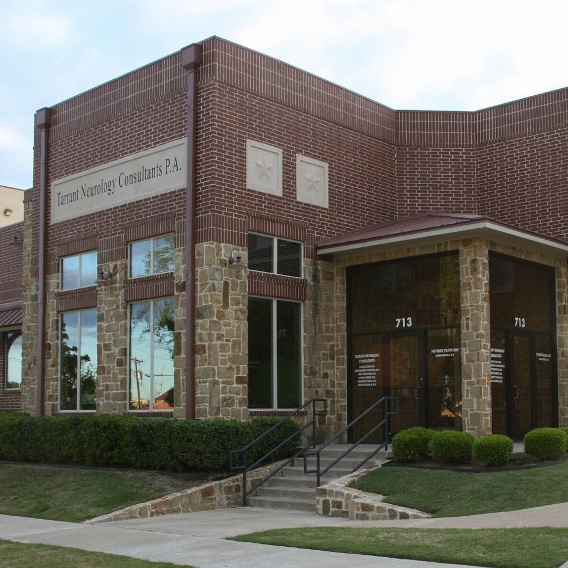
Our Location
We are conveniently located in the Hospital District of Fort Worth with easy access from all directions.
Reputable Neurology Center
Our patients benefit from a wide range of consultative services in a single setting. We currently have affiliations with HCA Plaza Medical Center and Texas Health Harris Methodist Health Systems.
With more than 30 years of experience, you can be assured of getting excellent treatment from us.
Our office is fully computerized using the latest Electronic Medical Record (EMR) technology. We also offer a comprehensive patient portal to help us and our patients work seamlessly towards the goal of analyzing and addressing their conditions.
Business Hours
Monday – Friday: 8:00 AM - 5:00 PM
Saturday – Sunday: Closed
Our Programs
Tarrant Neurology Consultants in Fort Worth, Texas offers neurological procedures addressing the concerns of our patients. With our facility and dedicated team of medical experts, we go above and beyond to give them the best treatments.
Stroke Program
Our team is dedicated to excellent care, stroke prevention education, and advancing treatment through research. We also provide diagnosis and management of stroke and other vascular neurology disorders in our outpatient clinic.
Epilepsy Program
Our dedicated team uses advanced diagnostic technologies to identify each patient’s seizure type and develop a personalized treatment plan for epilepsy neurological disorder.
Multiple Sclerosis Program
Our team provides comprehensive, personalized care using modern medicine, holistic treatments, and a multidisciplinary approach to managing the complexities of multiple sclerosis and related conditions

Memory Disorders / Dementia Program
Our memory specialists combine clinical expertise with advanced technology and research to provide accurate diagnosis, effective treatment, and ongoing management
Movement Disorder Treatment
All movement disorders treatment plans are based on each patient’s unique needs and preferences.
Services
Electromyography (EMG) and Nerve Conduction Studies (NCS) are specialized diagnostic tests used to evaluate the health and function of your muscles and the nerves that control them. These tests play a crucial role in identifying problems within the neuromuscular system and help physicians determine the cause of symptoms such as numbness, tingling, pain, muscle weakness, cramping, or abnormal movements.
Read More
Ambulatory EEG testing is a noninvasive diagnostic procedure that continuously records the electrical activity of the brain over an extended period, usually ranging from 24 to 72 hours, while the patient goes about their normal daily routine. Unlike a standard in-office EEG, which captures brain activity for a short time in a controlled setting, an ambulatory EEG allows physicians to observe brain function during real-life situations such as sleeping, working, and performing routine activities. This extended monitoring significantly increases the likelihood of capturing abnormal brain activity that may not appear during a brief test.
Read More
Multiple Sclerosis (MS) is a chronic neurological condition that affects the brain, spinal cord, and optic nerves. It occurs when the immune system mistakenly attacks the protective covering of nerve fibers (myelin), disrupting communication between the brain and the rest of the body. Because MS can present with a wide range of symptoms—such as fatigue, weakness, vision problems, numbness, balance issues, cognitive changes, and mood disturbances—a thorough and comprehensive neurological evaluation is essential for accurate diagnosis and effective management.
Read More
Peripheral neuropathy is a condition that affects the peripheral nerves, which are the nerves located outside of the brain and spinal cord. These nerves are responsible for sending sensory information, such as touch, pain, and temperature, to the brain, as well as controlling muscle movement. When these nerves are damaged or not functioning properly, it can lead to a wide range of symptoms. Common symptoms include numbness, tingling, burning sensations, sharp or shooting pain, muscle weakness, poor coordination, or sensitivity to touch. Symptoms may begin gradually and often start in the hands or feet, sometimes progressing upward over time.
Read More
Botox is a well-established, FDA-approved treatment widely used for managing chronic migraines and neuromuscular disorders associated with muscle spasticity. It has been extensively studied and proven effective for patients who experience frequent, debilitating headaches or muscle overactivity that interferes with daily functioning. When used therapeutically, Botox works by blocking the release of certain chemicals involved in muscle contraction and pain transmission. This action helps relax overactive muscles and interrupts pain pathways, reducing both discomfort and functional limitations.
Read More
A Nerve Conduction Study (NCS) is a diagnostic test that measures how quickly and effectively your nerves transmit electrical signals throughout the body. Nerves play a vital role in carrying messages between the brain, spinal cord, and muscles. When a nerve is damaged or compressed, these signals can slow down or weaken, leading to symptoms such as pain, numbness, tingling, weakness, or loss of coordination. An NCS helps physicians accurately identify the source of these symptoms.
Read More
An occipital nerve block is a minimally invasive, in-office procedure used to relieve pain associated with chronic headaches, migraines, and occipital neuralgia. These conditions often originate from irritation or inflammation of the occipital nerves, which run from the upper neck to the back of the scalp and play a key role in transmitting pain signals from this area. When these nerves become overly sensitive or inflamed, patients may experience persistent head and neck pain, scalp tenderness, or headaches that radiate toward the forehead or behind the eyes.
Read More
Vagus Nerve Stimulation (VNS) therapy is an established treatment option for patients with epilepsy who do not achieve adequate seizure control with medication alone. Many individuals with epilepsy continue to experience seizures despite trying multiple anti-seizure medications, and VNS therapy offers an additional, non-pharmacological approach to help improve seizure management and quality of life.
VNS therapy involves the surgical implantation of a small medical device, similar in size to a pacemaker, under the skin of the chest. During the procedure, a thin wire is carefully connected from the device to the vagus nerve, a major nerve that runs from the brain through the neck to the chest and abdomen. Once implanted, the device delivers mild, intermittent electrical pulses to the vagus nerve at programmed intervals.
Read More
A neuropsychological evaluation is a comprehensive assessment designed to understand how well different areas of the brain are functioning and how these functions affect everyday life. It examines the relationship between brain health, thinking skills, emotions, and behavior. This type of evaluation is commonly recommended when there are concerns about memory, attention, reasoning, or changes in personality or behavior.
During the evaluation, several key cognitive domains are tested. Memory and attention are assessed to determine how well a person can learn new information, retain it, and stay focused over time. Problem-solving and executive functioning are evaluated to understand skills such as planning, organization, judgment, and decision-making. Language abilities are tested to measure understanding, word-finding, reading, and communication skills. Processing speed is also examined, which reflects how quickly and efficiently the brain can take in and respond to information. In addition, mood and behavior are carefully reviewed, as emotional health can significantly influence cognitive performance.
Read More
Our Team
At Tarrant Neurology Consultants in Fort Worth, Texas, we are dedicated to providing remarkable neurological assessments and procedures to address your health concerns. From consultation to treatment, our medical professionals are here for you.

Testimonials
The practice is good and my mother’s doctor is also good. I like her approach and the way my mother has improved; however, she is way too serious and never cracks a smile. Doesn’t make you feel cared for. I would want her to make the patients feel a little more cared for.
My experience here was very positive. Their friendly staff checked me in as soon as I arrived. My wait was very short. I saw Dr Chalil and his PA Cat and they were very professional. Extremely informative and shared a plan during my first visit. I feel very confident in their are.
My sister has seen Dr. Chunduri several times. She and I feel confident in Dr. Chunduri with his diagnosis and treatment. The MA and staff are professional, kind and helpful. We highly recommend Dr. Chunduri.
Dr Mehortra is always ready to listen to my complaints and is always so caring I appreciate that a lot. His MA who, I am so sorry that I can never remember her name, is always so profesional. Great people those 2. Thank you guys so much.